
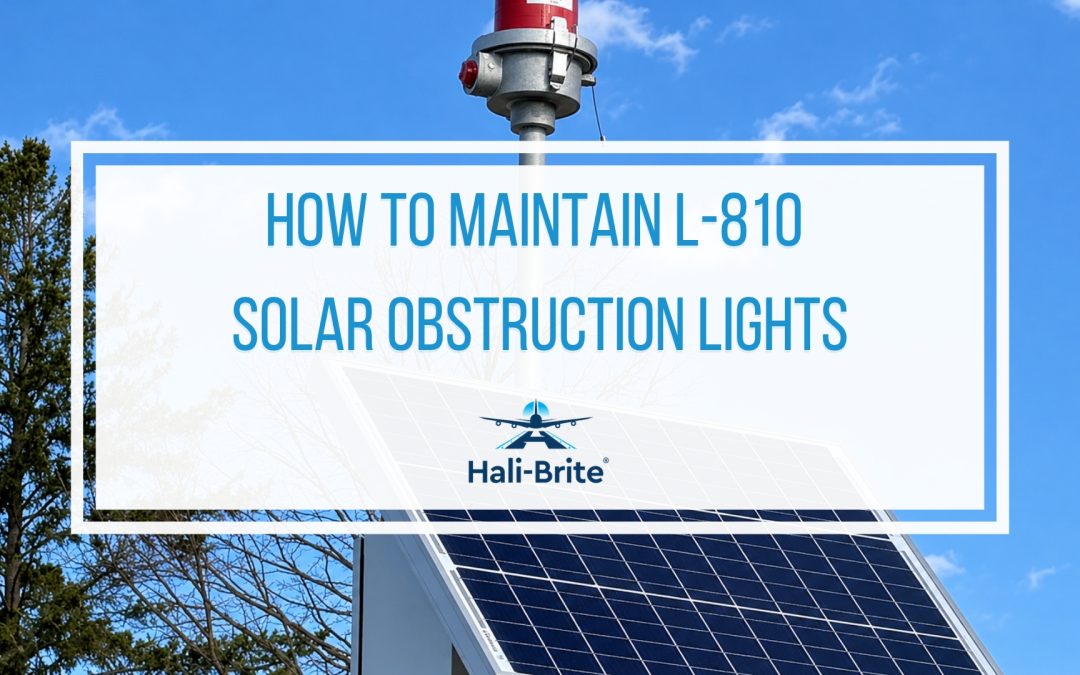
Obstruction lights help pilots recognize structures that might interfere with flight operations, especially during low-visibility conditions. When such structures are far from an electrical supply, solar-powered lights provide a practical way to mark hazards without installing long power lines. However, an off-grid system still needs attention. A dirty solar panel or a damaged connection can lead to unexpected lighting failures. Let’s explore how L-810 solar obstruction lights operate and the maintenance required to ensure long-term reliability.
- How L-810 Solar Obstruction Lights Operate
- Why Remote Installations Require Special Maintenance Planning
- Common Maintenance Requirements for Solar Obstruction Lights
- How to Identify and Prevent Solar Lighting Failures
- Keeping Remote Obstruction Lighting Reliable With Hali-Brite
How L-810 Solar Obstruction Lights Operate
L-810 obstruction lights are low-intensity red lights used to identify certain structures that might present aviation hazards. Depending on the structure and its location, these lights can mark buildings, perimeter fences, rooflines, or portions of larger obstacles. The Federal Aviation Administration (FAA) provides guidance for obstruction lighting systems, including the placement and visibility of steady-burning L-810 lights. The appropriate configuration depends on the specific structure.
An L-810 solar obstruction light collects sunlight through a panel, stores energy in a battery, and uses that stored power to run its LED fixture. Our L-810 Solar Obstruction Light, for example, has a 50-watt solar panel and a 50 Ah lithium-ion battery rated for 4,000 discharge cycles or more than 10 years under stated conditions. It features automatic dusk-to-dawn operation and an optional “Always On” mode that supports continuous lighting, making it useful where connecting to the electrical grid might be difficult or expensive.
Why Remote Installations Require Special Maintenance Planning
Solar obstruction lighting systems can operate independently of the electrical grid but are not maintenance-free. An issue that goes unnoticed might eventually cause an unexpected nighttime outage.
Difficult Access
A light installed at an isolated site or on a distant structure might be hours away from your maintenance team. Rough roads or the need for specialized lifting equipment can further delay repairs. Prepare a maintenance schedule before installation and keep appropriate replacement parts available. Where daily visual checks are impractical, the FAA recommends a properly maintained automatic monitoring system.
Unpredictable Weather
Prolonged cloud cover, heavy rain, snow accumulation, and shorter winter days can reduce the energy a panel generates. One overcast day might not cause a failure, but repeated days with limited sunlight can gradually reduce stored battery power. Consider the hours of sunlight during winter and typical cloudy conditions at your site. Review local weather patterns when planning maintenance and make sure the system is appropriately sized.
Blocked Sunlight
A solar panel needs direct sunlight to collect energy efficiently. Tree branches, tall grass, dust, fallen leaves, and other debris can cover part of its surface or cast shadows. These changes might happen slowly enough that you miss them during occasional visits. Check for new obstructions from different directions, remove debris with manufacturer-approved methods, and trim vegetation when necessary before it limits charging.
Temperature Changes
Battery performance can vary with temperature. Cold conditions can reduce available battery capacity, while prolonged heat might contribute to wear. Substantial temperature changes can further put stress on exposed equipment. Compare local climate conditions with manufacturer operating limits and battery guidance. Do not assume that a long service-life rating eliminates the need for periodic battery checks.
Common Maintenance Requirements for Solar Obstruction Lights
An effective and efficient maintenance plan covers the lighting fixture and the components that keep it powered. The LED, light sensor, solar panel, battery, controls, and mounting hardware all contribute to dependable operation.
LED and Photocell
Confirm that the LED operates during its intended lighting hours and remains clearly visible from the required directions. Check the lens for cracks, dirt, discoloration, or moisture that might affect its output. Verify that the photocell activates the light at dusk and turns it off during daylight, unless the system is configured for continuous operation.
Solar Panel
Inspect the panel for dirt, stains, leaves, snow, and anything that blocks sunlight. Clean the surface as needed using manufacturer-recommended methods, and avoid abrasive materials that might damage the panel. Remove leaves and trim nearby growth as necessary. Ensure the panel remains at the correct angle, facing the intended direction.
Battery and Controller
Check the battery condition and look for signs of damage or swelling. Review the charge controller status display for battery charge, solar input, and lighting load. Compare readings under similar daylight conditions. Repeated low-charge indications might point to insufficient sunlight, wiring problems, or a battery that needs qualified assessment.
Mounts and Connections
Examine mounting brackets, fasteners, the enclosure, and accessible cables for wear or other damage. Strong winds and vibration can gradually shift a panel or loosen hardware. Make sure the enclosure seals remain intact and the cables are protected. Note that electrical inspection and repairs must be performed only by trained personnel.
How to Identify and Prevent Solar Lighting Failures
An L-810 solar obstruction light that shuts off before morning or fails to operate after several cloudy days is a warning sign. Check for panel shading, accumulated debris, changes in charge controller readings, or evidence of a damaged cable. If the cause remains unclear, have qualified technicians assess the electrical connections, panel output, charge controller, and battery. Do not modify the system or substitute unapproved components. If a required obstruction light goes out, follow the applicable FAA and site-specific outage procedures.
Keeping Remote Obstruction Lighting Reliable With Hali-Brite
Reliable off-grid lighting begins with the right installation and continues with consistent maintenance. Keep the solar panel correctly positioned, clear of growing vegetation, and free from debris that reduces sunlight exposure. Check that the light itself remains unobstructed and that its mounting hardware stays secure. When repairs become necessary, use manufacturer-approved replacement components and trained personnel to help preserve safe operation and intended performance.
Hali-Brite offers FAA-certified airport lighting products designed for demanding locations, including our L-810 Solar Obstruction Light for reliable off-grid aviation hazard marking. If you’re planning a remote installation or troubleshooting an existing obstruction lighting system, our experienced team can provide technical support and maintenance guidance to help you make informed decisions. Contact Hali-Brite today at (218) 454-0956 or here to discuss your airfield lighting needs.