
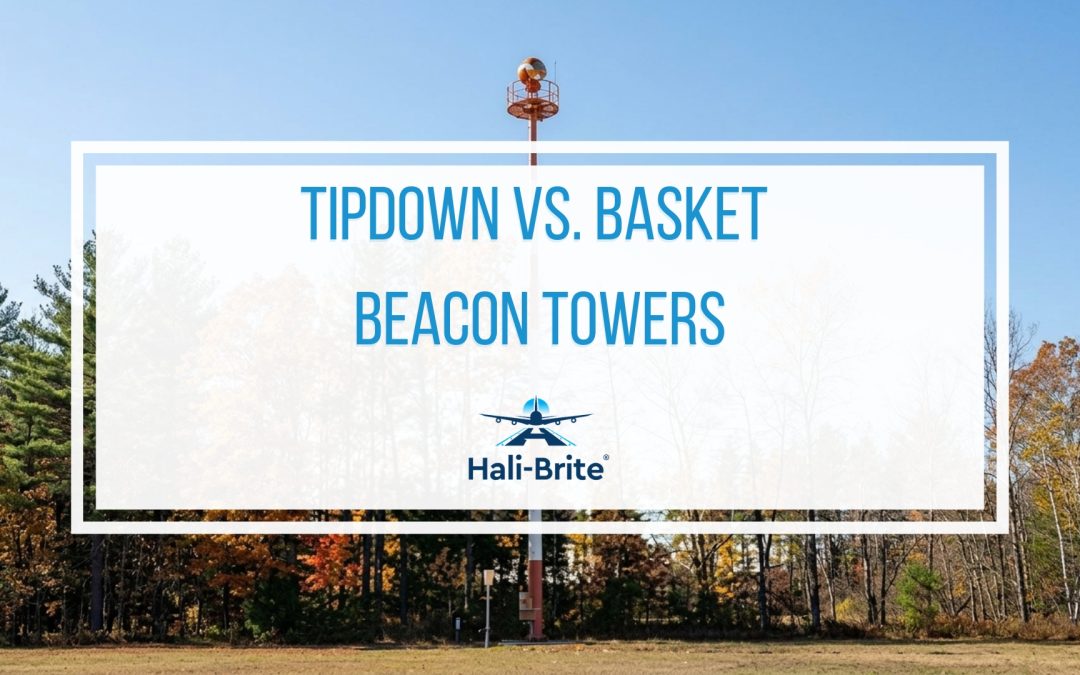
When an airport beacon needs inspection, lamp replacement, cleaning, adjustment, or electrical service, the structure holding it in place can make the job simple or difficult. A beacon is typically mounted high above the airfield to help pilots identify the airport from a distance. Because of that, the tower design can influence how safely and efficiently maintenance crews perform their work. Two common options are the basket-style and tipdown beacon towers. Both can support airport beacon systems, but handle access in very different ways.
- Why Beacon Tower Design Matters
- How Tipdown Beacon Towers Work
- How Basket Beacon Towers Work
- Selecting the Right Beacon Tower for Your Airfield
Let’s explore how beacon tower design can affect maintenance safety, service time, and long-term airport operations.
Why Beacon Tower Design Matters
A beacon tower supports the airport beacon at the height needed for visibility. Airport rotating beacons, such as the L-801 and L-802 systems, help identify an airport from a distance, especially during low-light or nighttime operations. To do that effectively, the beacon must be mounted on a strong, stable structure that can keep it properly positioned. The tower must support the beacon, withstand weather exposure, and provide a practical way for technicians to inspect and service the equipment when necessary.
The Federal Aviation Administration (FAA) recognizes different beacon tower configurations. Tubular steel designs, for instance, are commonly built from high-strength steel sections welded together to form a tall, rigid support structure. These towers often include an elevated platform or basket where the beacon is mounted, along with safety climbing features for workers who need to access the beacon at height. Meanwhile, tip-down pole towers use a hinged structure that allows the upper section of the tower to be lowered for service.
Furthermore, tower design affects long-term operating costs. If a beacon is difficult to access, routine maintenance might require lift equipment, more workers, longer service windows, and stricter safety planning. Beacons might need periodic inspections, lens cleaning, lamp or LED servicing, motor checks, wiring review, corrosion checks, and lightning protection inspection. A beacon tower that makes those tasks easier can reduce downtime and help maintenance teams respond faster when the airport beacon needs attention.
How Tipdown Beacon Towers Work
A tipdown beacon tower uses a center-hinged design that allows the upper portion of the tower to rotate downward. Instead of requiring a technician to climb to the top of the structure, the beacon can be lowered closer to ground level. With that setup, technicians can access the beacon, mounting plate, wiring, and related components from a much safer working height. That can make routine maintenance more manageable because the work can often be completed without a bucket truck or lift. It enables one trained person to lower or raise the pole in many applications, depending on the system design and site safety procedures.
Our Beacon Tipdown Pole, for instance, provides a tall mounting platform for L-801 or L-802 airport rotating beacons, available in several heights, typically ranging from 25 to 55 feet. The center-hinged design enables the beacon to be lowered for easier service, while the mounting plate can accommodate related components, such as lightning protection. Finish options include prime coat, factory paint, hot-dip galvanizing, or self-weathering material, depending on site needs. For airports that want to reduce climbing, improve maintenance access, and simplify long-term service, it can offer a valuable safety advantage.
How Basket Beacon Towers Work
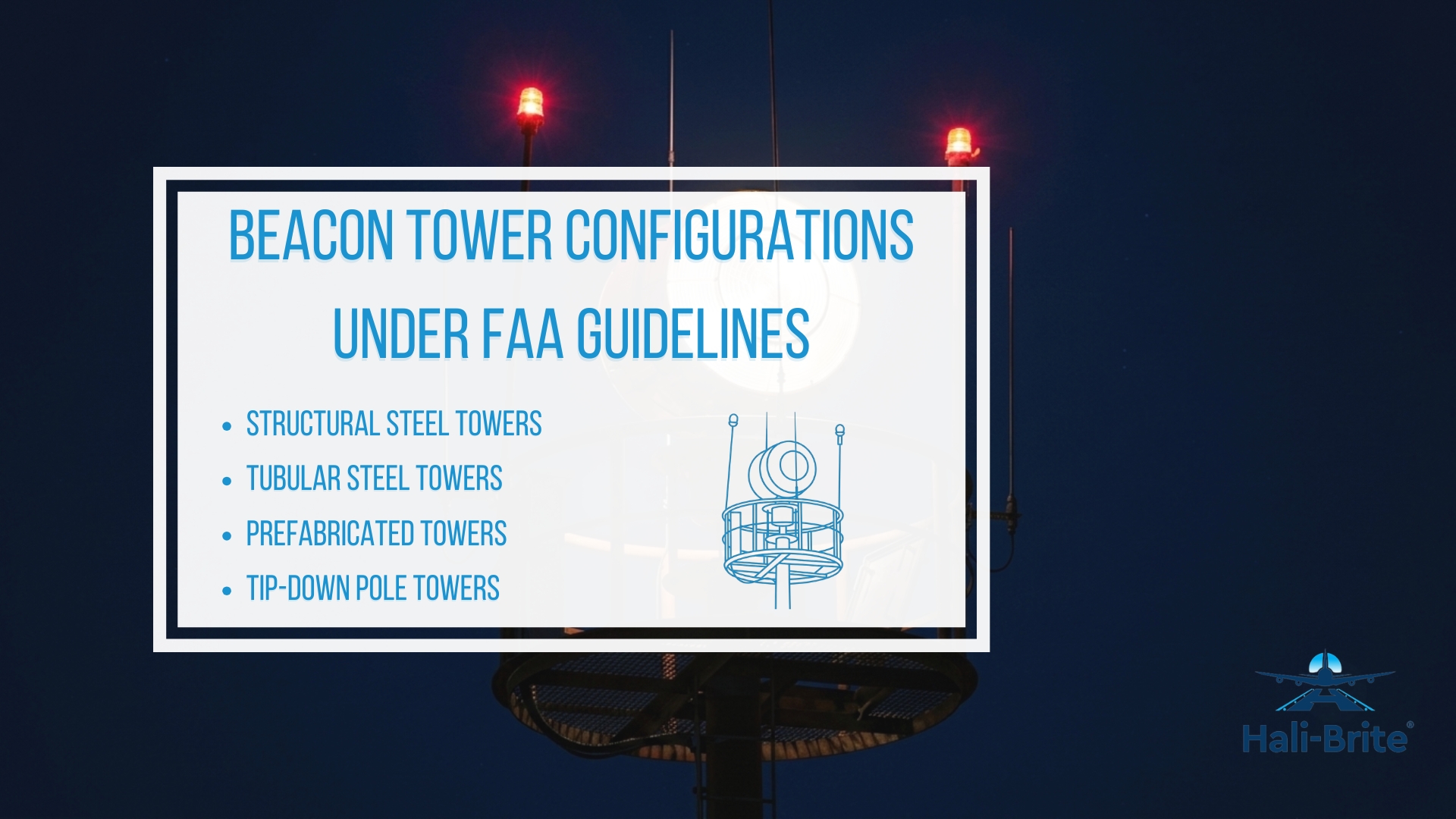
Basket beacon towers employ a fixed tubular steel structure to support the airport beacon at an elevated height. Unlike a tipdown pole, the tower does not lower to the ground for maintenance. Instead, it stays upright, and access is provided through built-in climbing features. These might include service steps, reinforced hand holes, and other access points that allow trained workers to reach the beacon assembly. Because the structure remains fixed, the tower must be strong enough to support the beacon and stay stable under local wind and weather conditions.
Basket towers remain useful in many airfield settings, especially when the airport wants a strong, fixed beacon tower with direct service access at the top. Our Beacon Basket Pole is an example of that traditional beacon tower design. It’s made from high-strength, low-alloy tubular steel with a round service basket, galvanized service steps, reinforced hand holes, an anchor base, internal wire guidance, and standard or customized height options. If your airport has established maintenance procedures for elevated work or needs a customized tower height for site-specific visibility, it can be a reliable and practical option.
Selecting the Right Beacon Tower for Your Airfield
The choice between a tipdown beacon tower and a basket beacon tower depends on your airfield, maintenance resources, site conditions, and long-term operating needs. A tipdown tower design might be the better choice if you want to limit the need for lift equipment and make routine service easier from ground level. But if your airport requires a fixed tower with traditional access and a service platform around the beacon, a basket tower might be a reasonable option.
Hali-Brite provides FAA-compliant airport lighting solutions for airfields that need dependable equipment and support systems. We offer both tipdown and basket beacon towers for airport beacon installations, giving you options based on your site conditions, maintenance needs, and safety priorities. Contact us today at (218) 454-095 or here to learn more about our beacon tower options. We can review your needs and help you find the right tower system for your airfield.