
When a pilot is lining up for landing, visual guidance becomes especially important in the final moments before touchdown. Even when other navigation tools are available, approach lighting systems help provide a quick, clear reference for whether the aircraft is coming in too high, too low, or on the proper path. That visual cue can make approaches more consistent, support safer landings, and help pilots react faster when conditions are less than ideal.
- What Approach Slope Lighting Systems Do
- Final Approach
- Glide Path
- Low-Light Conditions
- How PAPI Systems Work
- How VASI Systems Work
- Two-Bar VASI
- Three-Bar VASI
- Tri-Color VASI
- Pulsating VASI
- Selecting and Maintaining the Right System for Compliance and Safety
Two of the most recognized airport lighting systems used for that purpose are PAPI and VASI. Both are designed to help pilots maintain a safe descent angle, but do not operate the same way and are not always used in the same settings. Let’s explore the difference between PAPI vs. VASI so you can understand how these approach lighting systems function and why such visual guidance remains essential even with modern cockpit technology.
What Approach Slope Lighting Systems Do
Approach Lighting Systems (ALS) are designed to give pilots visual guidance during landing. While the details of PAPI vs. VASI differ, both systems serve the same broad purpose: to help pilots make safer, more accurate approaches. Here are the main ways these systems provide support:
Final Approach
At the final part of the approach to the runway, the aircraft is descending, aligning with the runway centerline, and preparing for touchdown, leaving little room for error. An appropriately placed approach lighting system offers instant feedback that pilots can read at a glance, helping them adjust their approach without delay.
Glide Path
A proper glide path keeps the aircraft at a safe and controlled angle all the way to the runway threshold. If an aircraft comes in too low, it might approach obstacles or terrain before reaching the runway. If it comes in too high, it might land too far down. Approach lighting systems help pilots stay on track throughout the approach.
Low-Light Conditions
In low-light conditions, it can be harder for pilots to judge distance, angle, and height using outside references alone. Light-based guidance makes the runway approach easier to interpret and improves situational awareness during a critical phase of flight. Approach lighting creates a more visible path when natural light is limited.
How PAPI Systems Work
A Precision Approach Path Indicator (PAPI) is a visual guidance system that helps pilots stay on the proper descent angle when approaching the runway. It’s typically installed as a row of four lights placed beside the runway, often on the left side, where pilots can easily read the light pattern during final approach. The system uses a combination of red and white lights to show glide path position. When the aircraft is on the proper path, the pilot sees two white lights and two red lights. More white lights mean the aircraft is too high, while more red lights show it is too low.
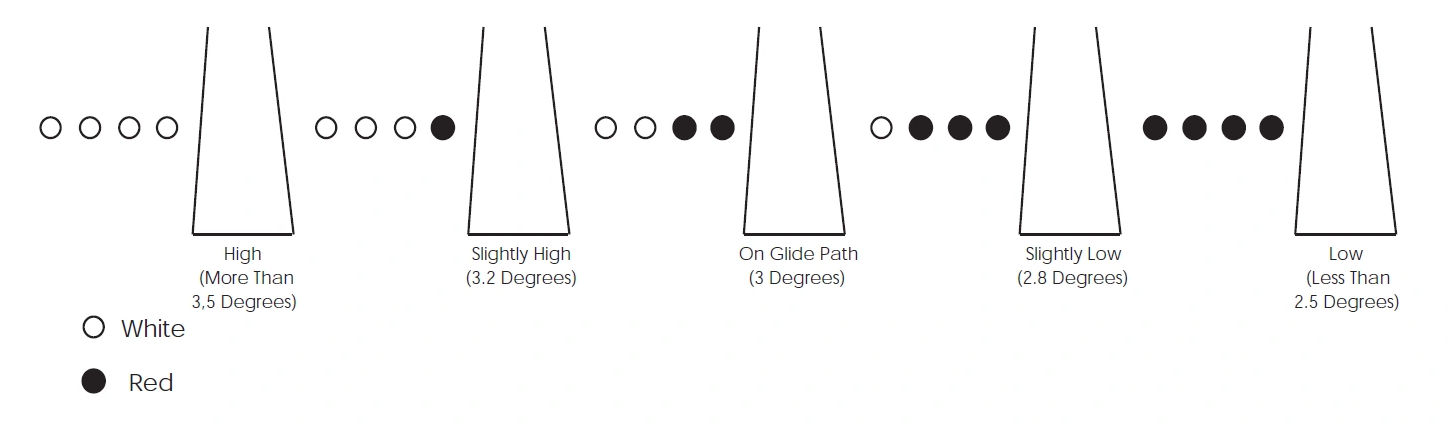
PAPI (Image Source: https://www.faa.gov/)
PAPI systems are widely used because these approach lighting systems provide a more precise and easy-to-read signal during the final approach. The four-light arrangement offers a clearer picture of small changes in approach angle, allowing pilots to make necessary corrections before landing, especially when approaching in low-light or reduced visibility situations. That’s why PAPI systems are common at commercial airports, where consistent and accurate approaches matter even more due to heavier traffic and more demanding operating conditions.
How VASI Systems Work
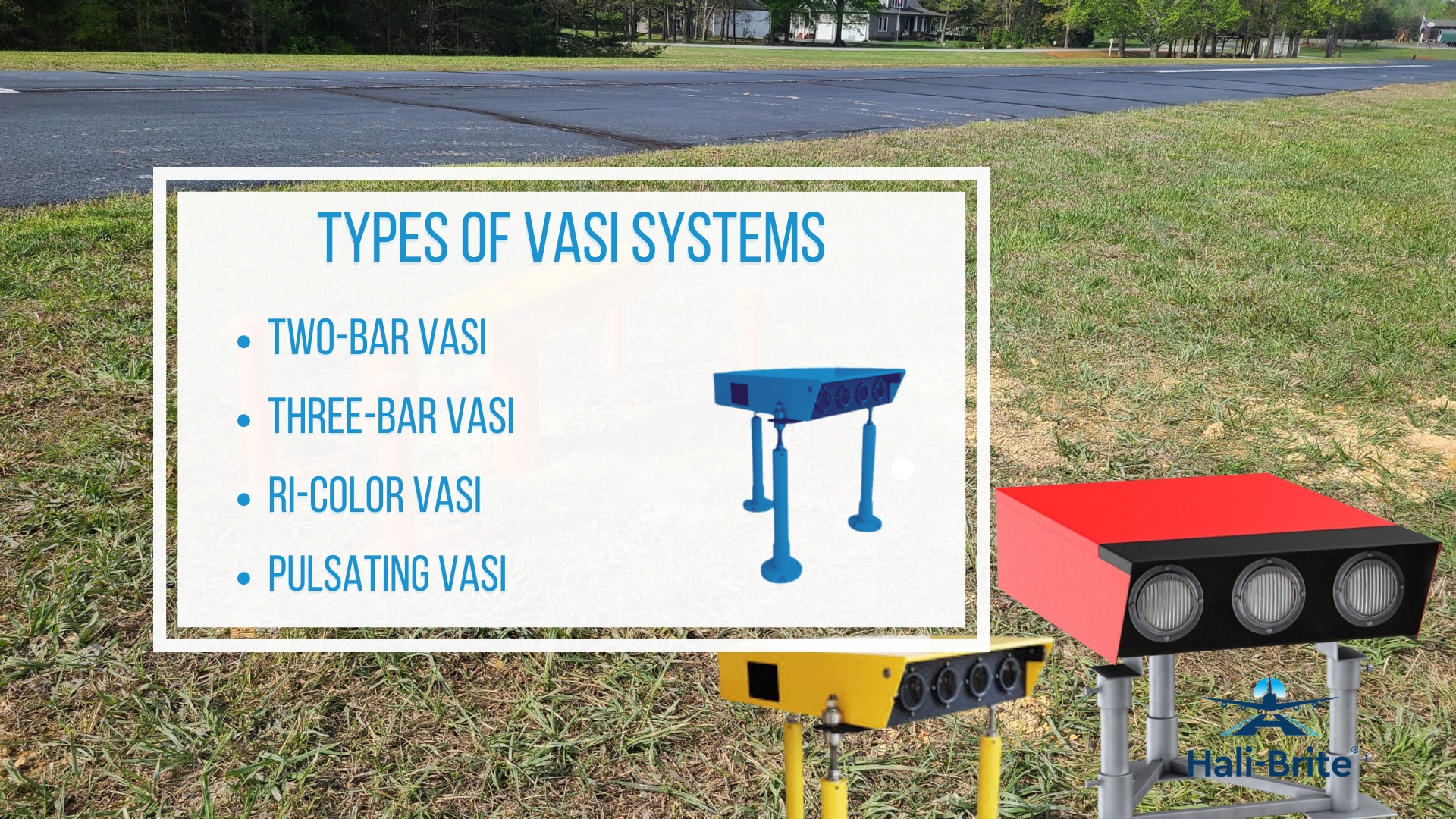
A Visual Approach Slope Indicator (VASI) is another lighting system that helps pilots stay on a safe glide path during landing. Similar to PAPI, it uses red and white lights, arranged in bars set apart, to show whether the aircraft is too high, too low, or on the correct descent path. VASI systems are often found at smaller or older facilities, including rural airports and airfields that continue to rely on established visual guidance systems.
Two-Bar VASI
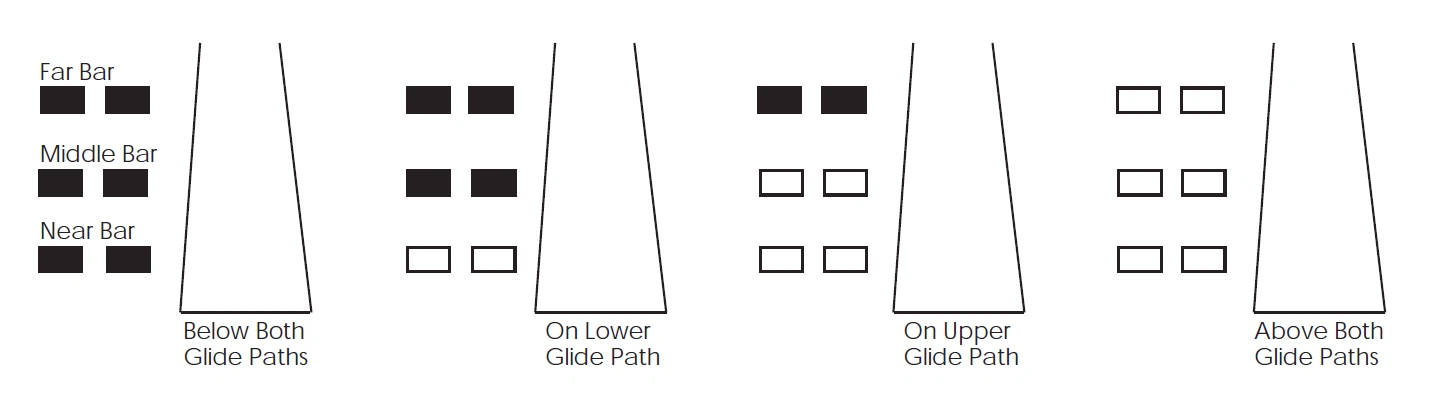
The two-bar VASI is the most common version of VASI systems. It uses a near bar and a far bar to provide one visual glide path, typically around three degrees. When you are on the correct glide slope, you can see white over red. If both bars appear white, the aircraft is too high. If both appear red, the aircraft is too low. The design is simple, effective, and makes it easy for pilots to read their position during approach.
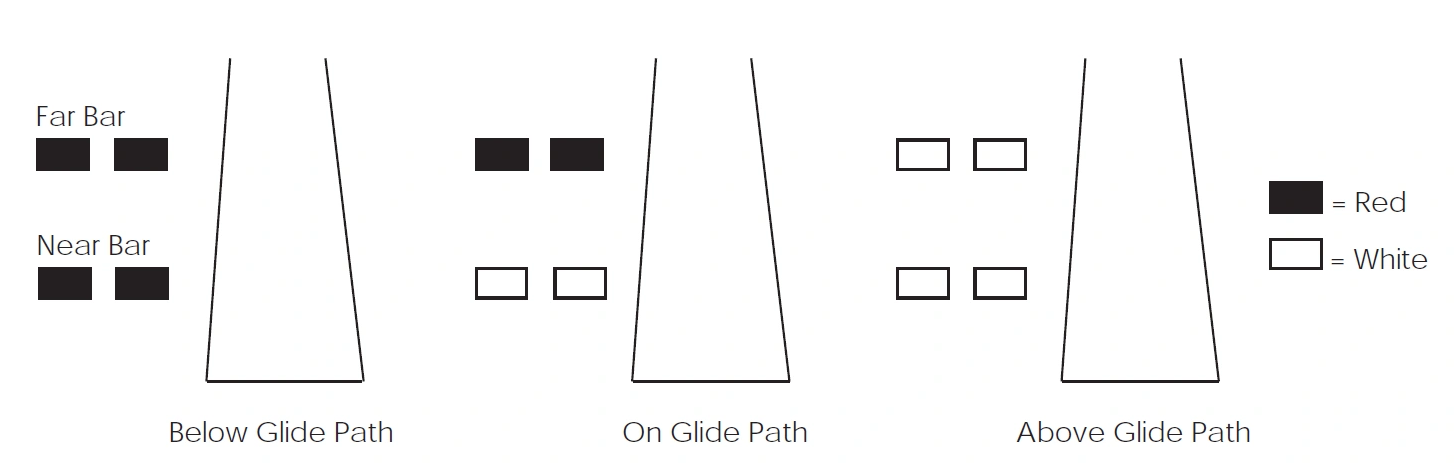
Two-Bar VASI (Image Source: https://www.faa.gov/)
Three-Bar VASI
The three-bar VASI adds a middle bar between the near and far bars, creating two glide paths instead of one. The setup is useful for larger aircraft with higher cockpit positions that might need a slightly higher approach angle to maintain proper runway clearance. The three-bar design makes the system more flexible than the two-bar version, especially at airports that handle a wider range of aircraft types.
Tri-Color VASI
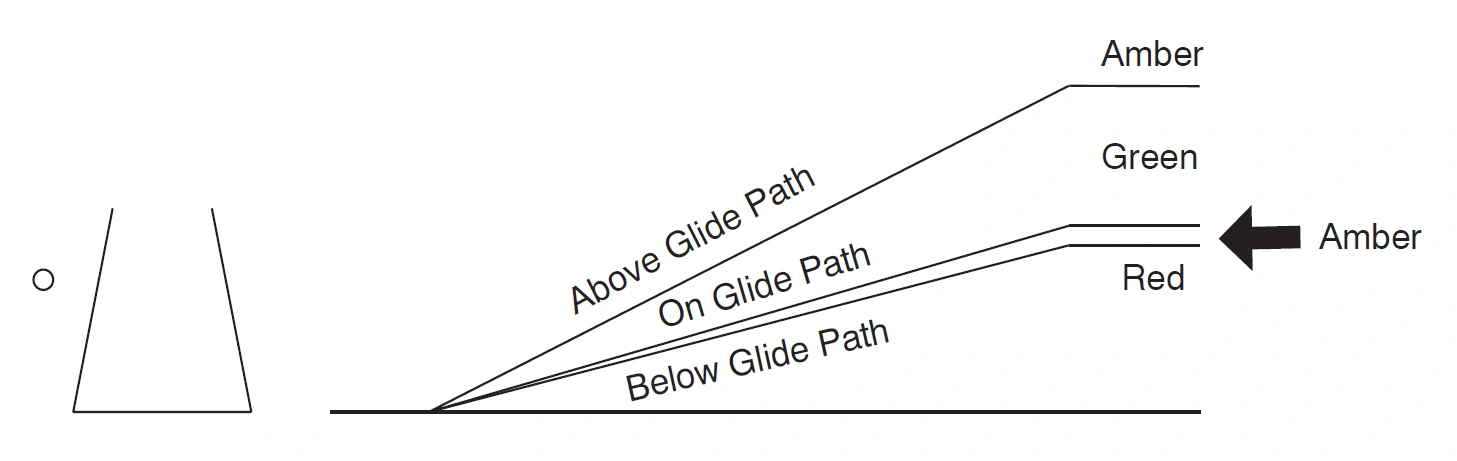
The tri-color VASI works differently from the bar systems because it uses a single light unit rather than multiple bars. It shows distinct colors based on the position of the aircraft. Green indicates the aircraft is on the proper glide path, red means it is below the correct angle, and amber means it is above. The system offers a compact visual aid and can be useful where airport operations call for a different type of slope guidance.
Pulsating VASI
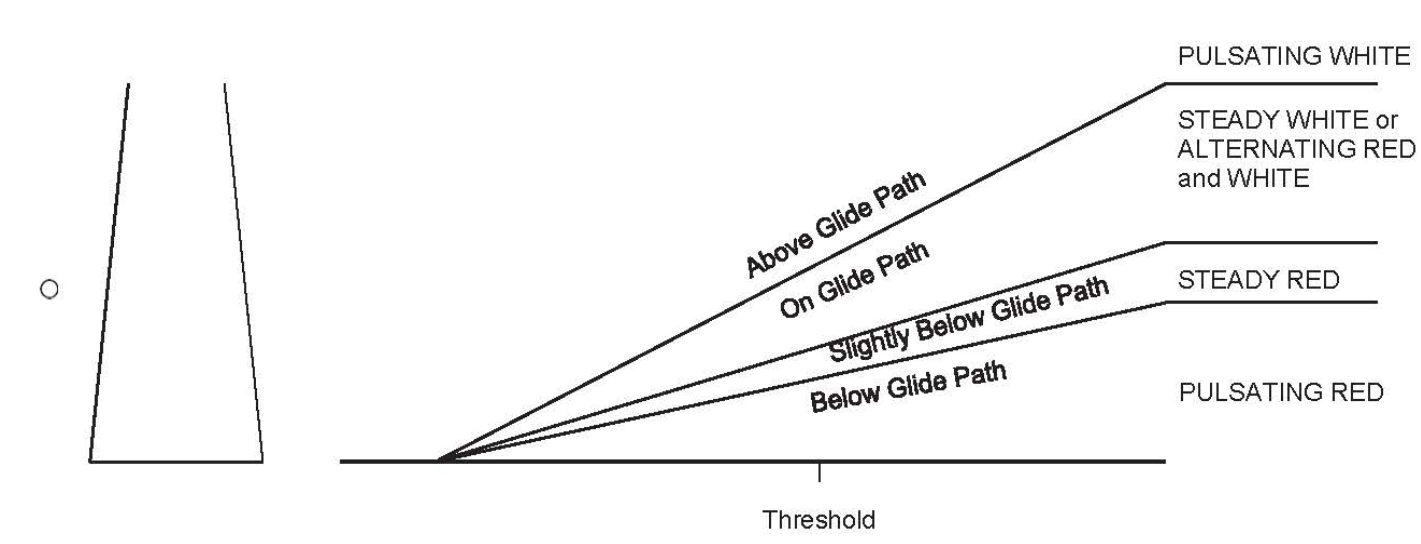
The pulsating VASI uses a single light unit, but adds flashing signals to make glide path changes more noticeable. As the aircraft moves farther above or below the desired slope, the light begins to pulse, and the pulse rate increases as the deviation becomes greater. That gives pilots a more attention-grabbing warning and can be especially helpful in changing light conditions where a stronger visual cue is necessary.
Pulsating VASI (Image Source: https://www.faa.gov/)
Selecting and Maintaining the Right System for Compliance and Safety
Choosing the right approach lighting system starts with understanding how your runway is used. Consider the aircraft activity, traffic volume, and the visibility demands placed on pilots during approach. A smaller airfield with lighter traffic might continue to perform well with an existing VASI setup, while a busier runway might benefit from the clearer guidance and more modern layout of a PAPI system. Just as important, the system has to be maintained properly to support compliance and dependable performance.
Hali-Brite provides reliable, FAA-compliant airport lighting solutions designed to support safe and efficient airfield operations. Whether you’re upgrading an older system or maintaining your current lighting infrastructure, our team can help you find a practical solution that fits your runway and traffic needs. We also offer cross-country ski trail lights for projects that require durable and effective outdoor lighting beyond the airfield environment. Contact us today at (218) 454-0956 or here to discuss the right lighting system for your facility.